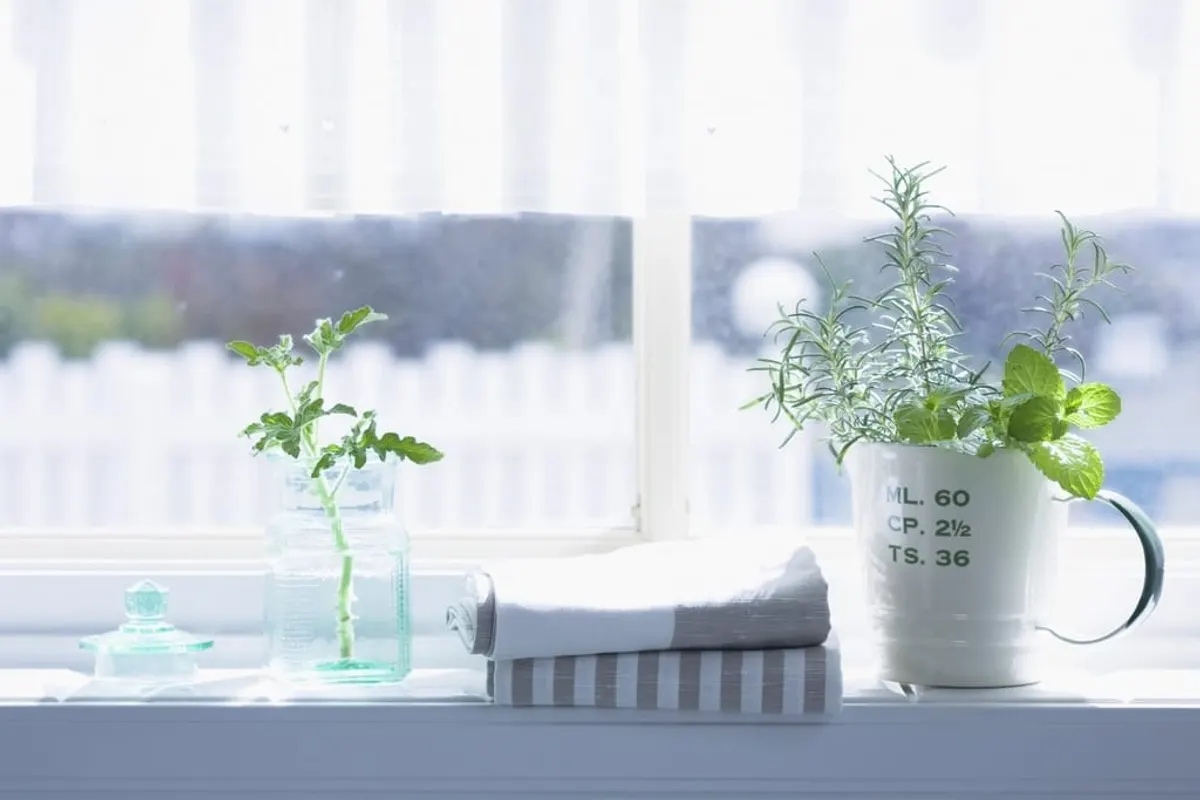
Herbs for a windowsill
Herbs need more light than houseplants: most want 6+ hours of sun. Which herbs work on a windowsill, which need a grow light, and which are safe around pets.
Top photo: Rosemary and mint growing in pots on a bathroom window. Photo: Unknown, CC0, via rawpixel.
The easiest herbs indoors are mint, chives, parsley and basil — but only on your sunniest window. Most culinary herbs want at least 6 hours of direct sun. A south- or west-facing window works in most US homes from spring to fall; in winter, or with an east or north window, add a grow light.
Herbs are not houseplants. A spot that keeps a pothos happy will leave basil thin and floppy.
Herbs by how much light they need
| Herb | Light indoors | Water | Difficulty | Pets (ASPCA) |
|---|---|---|---|---|
| Mint | 4–6 h sun or bright light | Keep slightly moist | Easy | Toxic to cats and dogs |
| Chives | 6 h sun | When top inch is dry | Easy | Toxic to cats and dogs |
| Parsley | 6 h sun; tolerates less | Keep slightly moist | Easy | Toxic to cats and dogs |
| Basil | 6–8 h sun, warm (above 60°F) | When top inch is dry | Easy in summer, hard in winter | Non-toxic |
| Cilantro | 6 h sun, cool | Keep slightly moist | Moderate — bolts fast | Non-toxic |
| Thyme | 6–8 h sun | Let dry between waterings | Moderate | Non-toxic |
| Oregano | 6–8 h sun | Let dry between waterings | Moderate | Toxic to cats and dogs |
| Rosemary | 6–8 h sun, cool winter | Let dry between waterings | Hard indoors | Non-toxic |
Have pets? Basil, thyme and rosemary are the safest choices. Check any herb on the ASPCA plant lists before putting it within reach.
Windowsill or grow light?
- South window, March–October: most herbs grow well.
- West window: good for basil and thyme; afternoon heat can dry small pots quickly.
- East window: mint, parsley and chives manage; basil gets leggy.
- North window, or anywhere in winter: use a grow light. A full-spectrum LED 6–12 inches above the herbs for 12–14 hours a day works well. Not sure what your window gives? Try the hand-shadow light test.
Starting: seed, cutting or supermarket pot?
| Start from | Time to first harvest | Notes |
|---|---|---|
| Supermarket potted herb | Right away | Split the crowded clump into 3–4 pots |
| Cuttings in water (basil, mint, oregano) | 3–5 weeks | Same method as rooting pothos |
| Seed (basil, chives, parsley, cilantro) | 4–10 weeks | Cheapest; parsley seed is slow to sprout |
| Small nursery plant (rosemary, thyme) | Right away | Slow from seed; buy these as plants |
Harvest so they keep growing
- Basil: pinch the top pair of leaves just above a leaf node. It branches into two stems. Pinch off flower buds.
- Mint and oregano: cut stems back by a third.
- Chives: cut a few blades at a time, 1–2 inches above the soil.
- Parsley and cilantro: harvest the outer stems first; new ones grow from the center.
- Never take more than a third of the plant at once.
Common problems
| Problem | Cause | Fix |
|---|---|---|
| Long, thin stems, small leaves | Not enough light | Sunnier window or a grow light |
| Basil leaves turning black | Cold (below about 50°F) or cold window glass | Move away from the glass at night |
| Yellow leaves, wet soil | Overwatering or no drainage | Pot with a hole; let the top dry |
| Cilantro flowering early | Heat and long days | Sow small batches every 3–4 weeks |
| Tiny flies | Fungus gnats | Let the topsoil dry |
Grow herbs outside too? Our vegetable planting calendar covers when to sow them in the garden.
Quick answers
Why do supermarket herbs die so fast at home?
Those pots are many seedlings crammed together, grown under ideal greenhouse light. Split the clump into 3–4 smaller pots, give them your sunniest window and they'll last much longer.
Can herbs grow in a north-facing window?
Not well. A north window in the US doesn't give the sun most herbs need. Mint, parsley and chives tolerate it best; basil and rosemary will stretch and weaken without a grow light.
Sources
- Clemson Cooperative Extension (HGIC) — Herbs
- NC State Extension Plant Toolbox — Ocimum basilicum (basil)
- ASPCA — Basil
- ASPCA — Mint
Checked November 9, 2026. Spotted an error? Tell us — see our editorial policy.
Pin it to your plant board so you can find it when you need it.
Save to PinterestKeep reading
More Garden →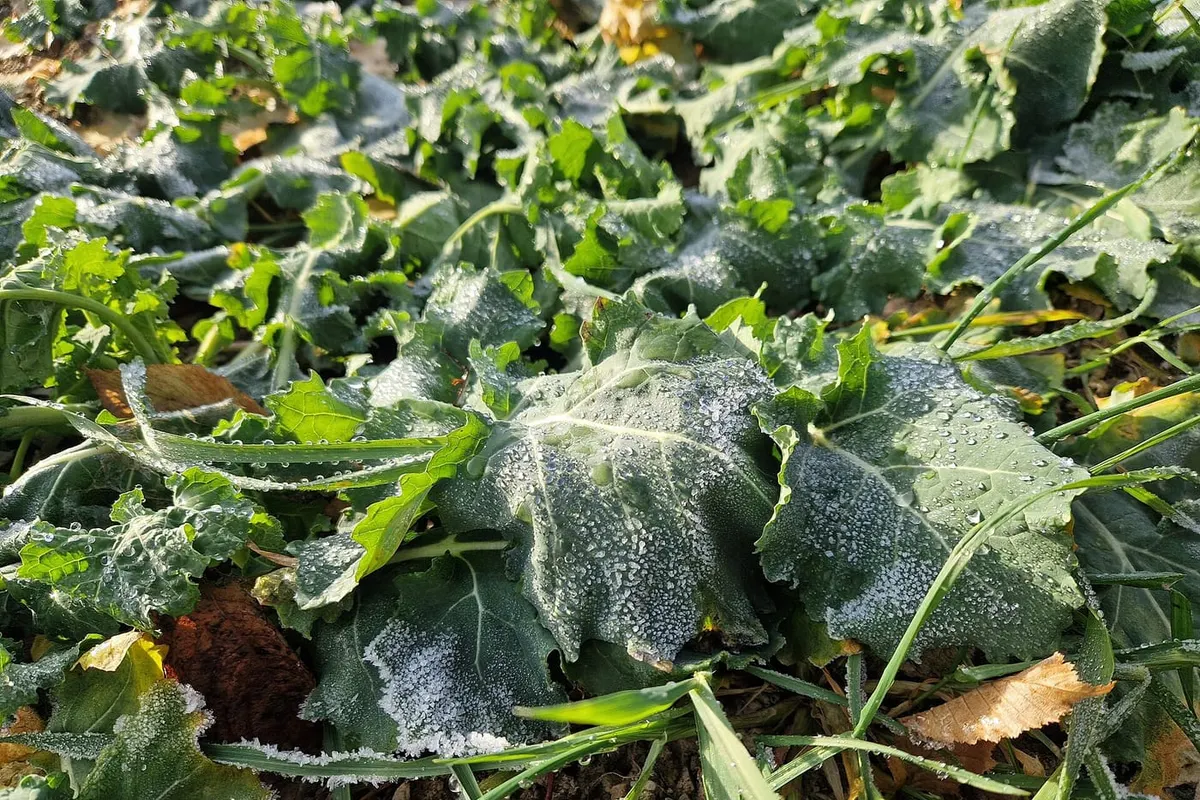
When to bring plants inside
Tropical houseplants should come in when nights drop below 50–55°F, well before frost. A temperature chart by plant type and a 5-step bug-check list.
Garden
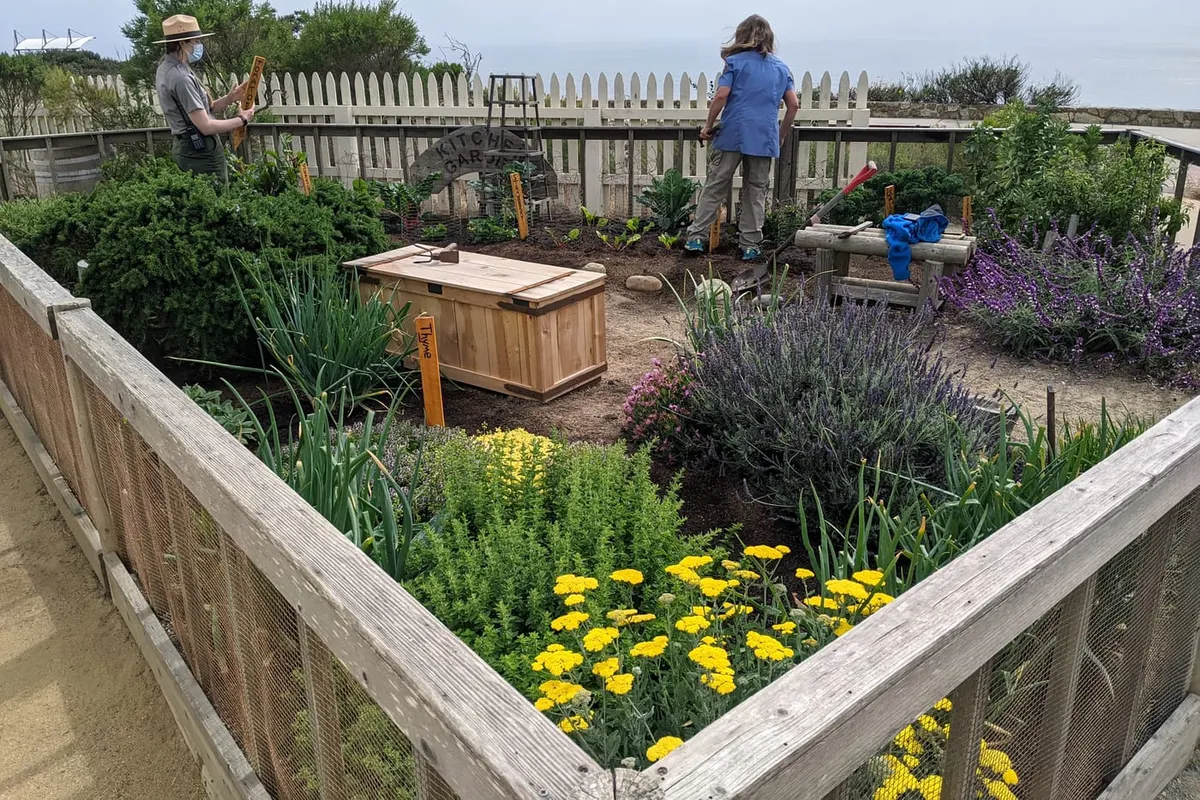
What to plant, month by month
A simple month-by-month vegetable planting calendar for the US and Australia. Seasons are flipped, so every month is listed for both hemispheres.
Garden
12 houseplants that are hard to kill
Serial plant killer? These 12 tough houseplants survive low light, missed waterings and dry air — plus the one mistake that still kills them.
Indoor Plants
10 plants for dark apartments
No sunny windows? These 10 plants grow in low light — plus how to tell how much light you really have and the one mistake people make in dark rooms.
Indoor Plants
Christmas cactus not blooming?
Christmas cactus sets buds when nights are long or cool. The 6-week plan to get blooms, why buds drop, and how to tell a Thanksgiving cactus from a Christmas cactus.
Indoor Plants
A watering chart for 24 plants
A printable watering chart for 24 popular houseplants: when the soil should be dry, how many days in summer vs. winter, and which plants are toxic to pets.
Plant Care Basics